

데일리스터디
The Boy Who Cried Wolf 늑대라고 외친 소년 / Aesop 이솝 본문
Once upon a time, in a peaceful green field where fluffy sheep grazed, lived a playful young boy. His job was to watch over the sheep and make sure they were safe.
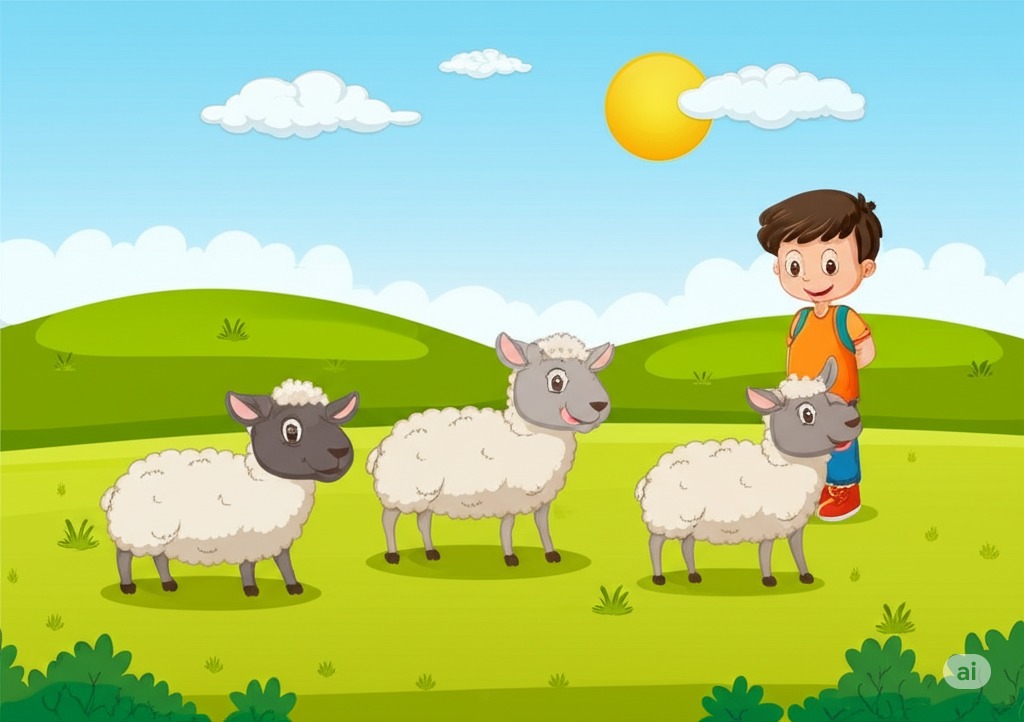
The boy, however, found his job a little boring. One sunny afternoon, he thought of a funny prank. He ran towards his village, shouting at the top of his lungs, "Wolf! Wolf! A big, scary wolf is attacking the sheep!"

Hearing his cries, the kind villagers quickly grabbed their sticks and rushed to the field to help. But when they arrived, they found no wolf, only the boy laughing loudly at his trick.

The boy played this trick many times. Each time, the villagers would come running, only to find themselves fooled again. They started to get annoyed and didn't believe the boy anymore when he shouted "Wolf!"

One day, a real wolf did come to the field. The boy was terrified and cried out, "Wolf! Wolf! Please help! There's a real wolf!"
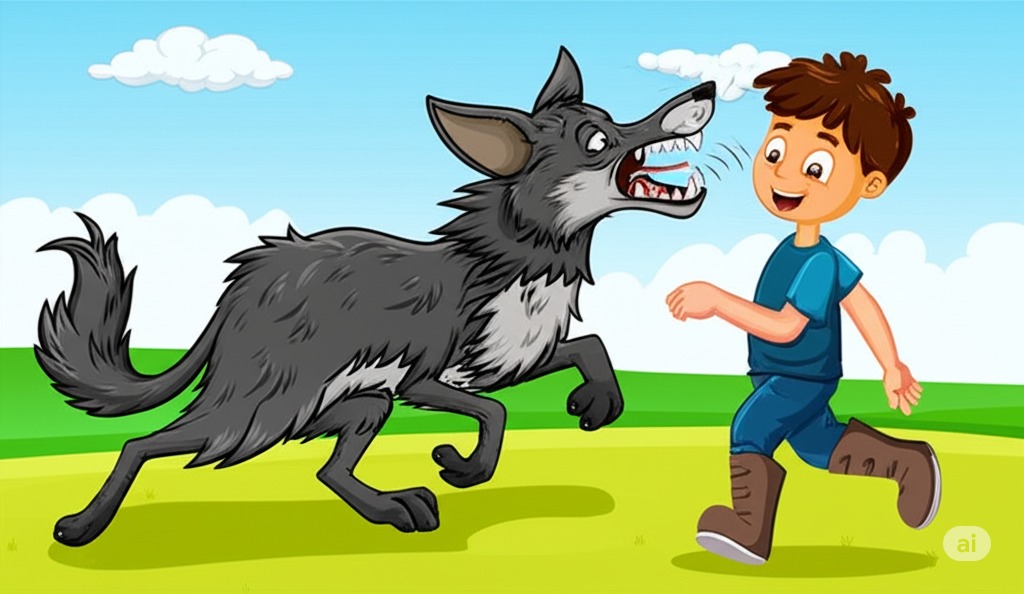
But this time, no one came. The villagers thought it was just another one of his silly pranks. The wolf scared the sheep, and the boy learned a painful lesson that day.
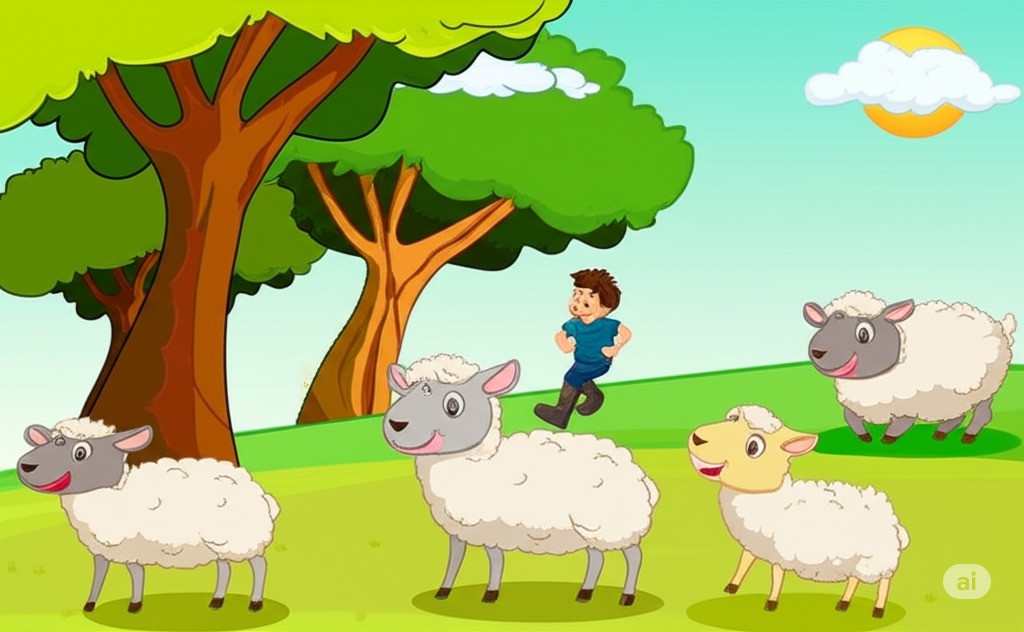
The moral of the story is: If you tell lies too many times, people will not believe you even when you are telling the truth.
Talking About The Boy Who Cried wolf
Study Guide: "The Boy Who Cried Wolf" by Aesop
Study Guide Questions
- Setting and Protagonist: Where does the story of "The Boy Who Cried Wolf" take place, and what is the main character's role?
- The Boy's Initial Motivation: Why does the boy first decide to cry "Wolf!" when there isn't one?
- Villagers' Initial Response: How do the villagers react the first time they hear the boy's cries? What do they do?
- Consequences of Repeated Deception: What happens when the boy plays the trick multiple times? How do the villagers' reactions change?
- The Turning Point: What significant event occurs one day that changes the nature of the boy's cries?
- Villagers' Response to the Real Threat: How do the villagers react when the boy cries "Wolf!" for a real wolf? Why do they respond this way?
- The Boy's Lesson: What "painful lesson" does the boy learn by the end of the story?
- The Moral of the Story: What is the stated moral of "The Boy Who Cried Wolf"?
- Aesop's Fables: Based on this story, what seems to be a common characteristic or purpose of Aesop's fables?
- Thematic Connection: How does the boy's job of watching sheep connect to the moral of the story about truth and trust?
Quiz
Short-Answer Questions
- Describe the boy's initial feelings about his job. What does this reveal about his character at the beginning of the story?
- How did the villagers demonstrate their kindness and willingness to help during the boy's first prank?
- What was the immediate consequence of the boy's first trick on the villagers' perception of him?
- Explain the cumulative effect of the boy's repeated lies on the villagers' trust.
- What significant change occurred in the field that created a true emergency for the boy?
- Why did the villagers choose not to respond when the boy genuinely needed help?
- What specific harm came to the sheep as a direct result of the boy's past actions?
- Summarize the central message or lesson the author wants readers to take away from the story.
- Consider the role of "trust" in this fable. How does the boy's behavior erode this essential element?
- If the boy had been honest from the start, how might the outcome of the real wolf attack have been different?
Answer Key
- The boy found his job "a little boring." This suggests he was easily bored and perhaps lacked a sense of responsibility or appreciation for his important task, leading him to seek entertainment through mischievous means.
- The villagers quickly grabbed their sticks and rushed to the field. This action demonstrates their immediate concern for the sheep and the boy, highlighting their helpful and caring nature.
- After the first trick, the villagers discovered there was no wolf and the boy was laughing. This experience likely planted the first seed of doubt in their minds, making them wary of his future cries.
- The boy's repeated lies caused the villagers to become annoyed and stop believing him. Each false alarm diminished their trust, making them increasingly skeptical and less likely to respond to his calls.
- One day, a real wolf came to the field. This transformed a playful prank into a genuine and dangerous threat, forcing the boy to face the true consequences of his previous deception.
- The villagers did not respond because they believed it was just another one of his "silly pranks." Their past experiences with his lies led them to dismiss his cries, even when they were true.
- The wolf scared the sheep. While the text doesn't explicitly state the sheep were killed, it implies they were harmed or put in danger due to the boy's inability to secure help.
- The central message is that consistently telling lies will cause people to lose faith in your words, even when you are speaking truthfully. Trust is easily broken and difficult to regain.
- The boy's behavior systematically eroded trust by demonstrating that his words were unreliable. Each false alarm was a breach of faith, teaching the villagers that his cries of "Wolf!" were meaningless.
- If the boy had been consistently honest, the villagers would likely have rushed to his aid when the real wolf appeared. Their prompt response could have potentially driven the wolf away, protecting the sheep and preventing the "painful lesson."
Essay Format Questions
- Discuss the evolution of the villagers' trust in the boy throughout the story. How do their reactions change from the beginning to the end, and what causes these changes?
- Analyze the concept of consequence as presented in "The Boy Who Cried Wolf." How does the story demonstrate that actions, even seemingly harmless ones, can have significant and unforeseen repercussions?
- Explore the boy's character arc. What kind of person is he at the beginning, what prompts his actions, and what kind of person does he become (or what does he learn) by the end?
- "The Boy Who Cried Wolf" is a classic fable. Identify and explain the key characteristics of a fable that are present in this story. How does it effectively convey its moral lesson?
- Consider the ethical implications of the boy's actions. What broader societal lessons about truthfulness, responsibility, and community trust can be drawn from his experience?
Glossary of Key Terms
- Aesop: The attributed author of a collection of fables, often featuring animals and conveying moral lessons.
- Fable: A short story, typically with animals as characters, conveying a moral.
- Moral: The lesson taught by a story, event, or experience.
- Prank: A mischievous act; a practical joke.
- Shepherd Boy: A young boy whose job it is to watch over sheep. In the context of the story, simply referred to as "the boy."
- Trust: Firm belief in the reliability, truth, ability, or strength of someone or something.
- Villagers: The people living in the village who are called upon to help the boy.
- Wolf: A wild carnivorous mammal of the dog family, often depicted as a predator in fables. In this story, it represents a real danger.
( N.B. 위 콘텐츠는 Google AI Studio 로 제작한 것입니다 )
'동화' 카테고리의 다른 글
| The Fox and the Grapes 여우와 포도 / Aesop 이솝 (2) | 2025.05.05 |
|---|---|
| The Ant and the Grasshopper 개미와 베짱이 / Aesop 이솝 (0) | 2025.05.05 |
| The Tortoise and the Hare 거북이와 토끼 / Aesop 이솝 (1) | 2025.05.04 |
| Snow-White and Rose-Red 스노우 화이트와 로즈 레드 / Grimm 그림 (0) | 2025.05.02 |
| Rapunzel's Story 라푼젤 이야기 / Grimm 그림 (0) | 2025.05.02 |


