
데일리스터디
Pompey the Great 본문
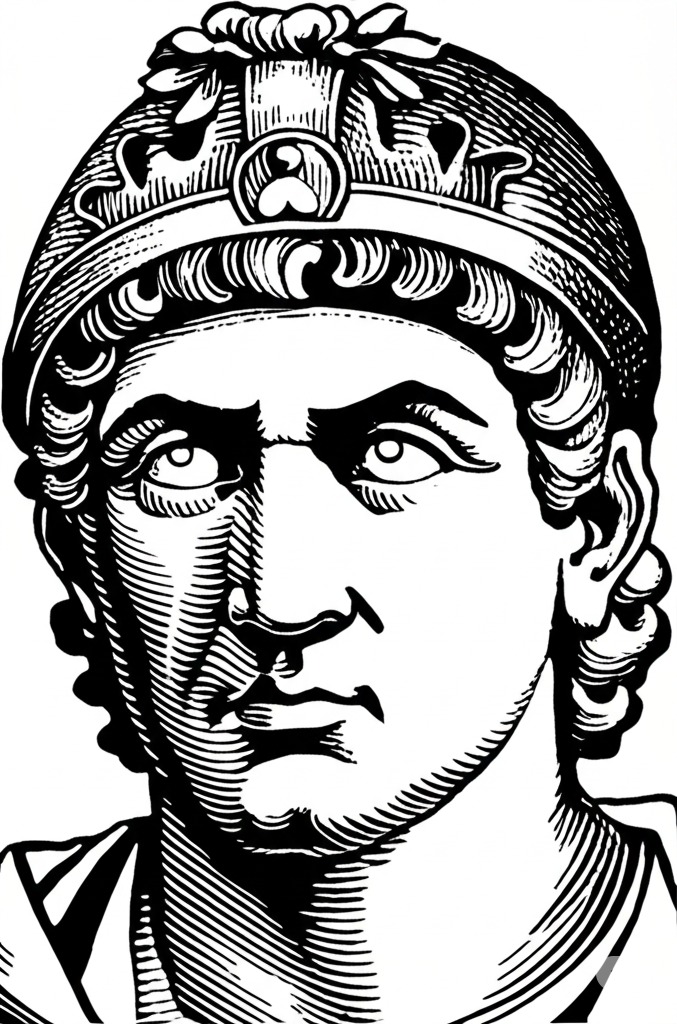
For Korean elementary school students, we can learn about Pompey the Great from both Plutarch's stories and information on Wikipedia. Plutarch, a writer from a long time ago, wrote about Pompey in his book "Plutarch's Lives," telling us about his amazing skills as a leader and his many victories in battles. Wikipedia also tells us that Pompey was a very important military and political leader in ancient Rome. He was so successful in wars that people called him "Magnus," which means "Great"! Both Plutarch and Wikipedia help us understand that Pompey was a powerful and respected figure in history.
Talking About Pompey the Great
Pompey the Great: Study Guide
Quiz
- Who was Plutarch, and what did he write about Pompey?
- According to the source, who was Pompey the Great?
- What nickname was given to Pompey, and what does it mean?
- What two sources of information are suggested for learning about Pompey?
- Why was Pompey called "Magnus"?
- Where did Plutarch write about Pompey?
- What aspects of Pompey's character are highlighted in the source?
- What was Pompey's role in ancient Rome?
- Is Wikipedia mentioned as a source of information about Pompey?
- What kind of audience is this information about Pompey intended for according to the source?
Answer Key
- Plutarch was a writer from a long time ago who wrote about Pompey in his book "Plutarch's Lives."
- Pompey the Great was a very important military and political leader in ancient Rome.
- He was called "Magnus," which means "Great."
- Plutarch's stories and information on Wikipedia are suggested.
- He was called "Magnus" because he was so successful in wars.
- Plutarch wrote about Pompey in his book "Plutarch's Lives."
- His amazing skills as a leader and his many victories in battles are highlighted.
- He was a military and political leader.
- Yes, Wikipedia is mentioned as a source of information about Pompey.
- The information is intended for Korean elementary school students.
Essay Format Questions
- Compare and contrast the information about Pompey the Great provided by Plutarch and Wikipedia, as presented in the source.
- Explain the significance of Pompey's nickname "Magnus" in understanding his historical importance.
- Discuss the role of leadership and military success in establishing a figure like Pompey as "Great" in ancient Rome.
- Analyze how historical figures like Pompey are made accessible and understandable to young audiences, considering the target audience mentioned in the source.
- Evaluate the limitations of relying solely on the sources mentioned (Plutarch's stories and Wikipedia) for a comprehensive understanding of Pompey the Great.
Glossary of Key Terms
- Pompey the Great: A very important military and political leader in ancient Rome.
- Plutarch: A writer from a long time ago who wrote about historical figures.
- Plutarch's Lives: A book by Plutarch that includes a story about Pompey.
- Wikipedia: An online encyclopedia.
- Magnus: A nickname given to Pompey, meaning "Great."
- Ancient Rome: The historical period when Rome was a powerful empire.
- Military leader: Someone who commands an army.
- Political leader: Someone who holds a position of power in government.
- Victories: Successes in battles or conflicts.
- Skills: Abilities or expertise.
( N.B. 위 콘텐츠는 Google AI Studio 로 제작한 것입니다 )
'동화' 카테고리의 다른 글
| Pelopidas (1) | 2025.06.06 |
|---|---|
| Agesilaus (1) | 2025.06.06 |
| Cimon (0) | 2025.06.06 |
| Coriolanus (0) | 2025.06.06 |
| Gaius Gracchus (0) | 2025.06.06 |


