데일리스터디
The Lion, the Witch and the Wardrobe / C.S. Lewis 본문
Four siblings, Peter, Susan, Edmund, and Lucy Pevensie, are sent to live in a big house in the countryside during wartime. Lucy, the youngest, finds a magical wardrobe that leads to a snowy land called Narnia. In Narnia, she meets a faun named Mr. Tumnus and learns that the land is ruled by the evil White Witch, who has made it always winter and never Christmas. Lucy returns and eventually convinces her siblings to go to Narnia. They learn about Aslan, a great and noble lion who is the rightful king of Narnia. The White Witch wants to stop Aslan and the children. Edmund betrays his siblings and joins the Witch, but he later realizes his mistake. Aslan sacrifices himself to save Edmund, but because he is innocent, he comes back to life. Aslan and the children lead the good Narnians in a great battle against the White Witch and her evil creatures, and they win. The children become kings and queens of Narnia and rule wisely for many years, before one day finding their way back through the wardrobe to their own world as children again.
Talking About The Lion, the Witch and the wardrobe
Study Guide: The Lion, the Witch and the Wardrobe
This study guide is designed to help you review and deepen your understanding of the provided excerpt from C.S. Lewis's "The Lion, the Witch and the Wardrobe."
Quiz
Answer each question in 2-3 sentences.
- Where are the Pevensie siblings sent to live during wartime, and what is the primary reason for their relocation?
- Who is the first Pevensie sibling to discover Narnia, and how does she find it?
- Upon her first visit, what two key pieces of information does Lucy learn about Narnia from Mr. Tumnus?
- Who is Aslan, and what is his significance to Narnia and its inhabitants?
- Describe Edmund's initial actions regarding his siblings and the White Witch.
- What act of sacrifice does Aslan make, and what is the outcome of this sacrifice?
- What happens to the children after the great battle against the White Witch?
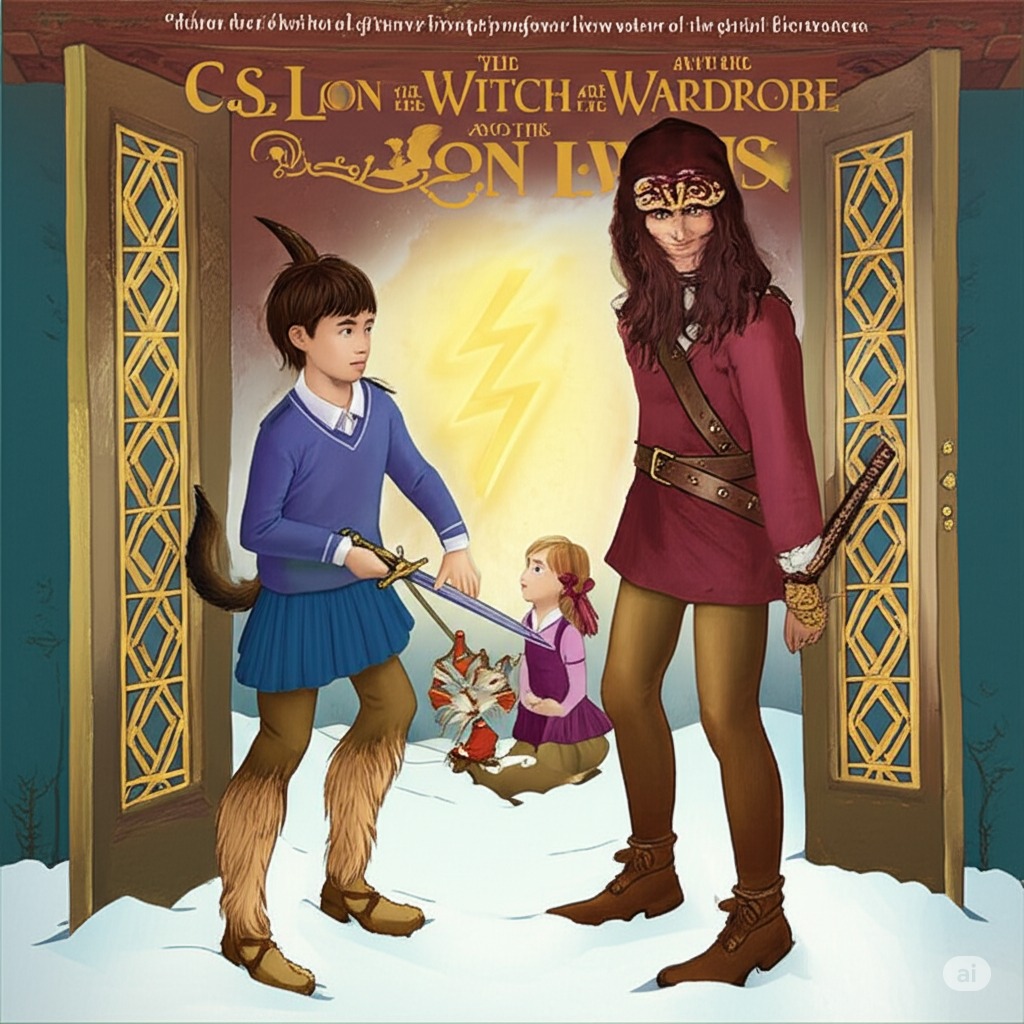
- How is the transition from the ordinary world to Narnia visually emphasized in the description of the wardrobe scene?
- What state is Narnia in under the White Witch's rule, and what does this signify?
- What is the central premise or starting point of the children's adventures as highlighted by the wardrobe scene description?
Answer Key
- The Pevensie siblings are sent to live in a big house in the countryside during wartime. This relocation is a common practice during wartime to ensure the safety of children away from potential urban conflicts.
- Lucy, the youngest Pevensie sibling, is the first to discover Narnia. She finds it by entering a magical wardrobe in the big house where they are staying.
- From Mr. Tumnus, Lucy learns that Narnia is ruled by the evil White Witch. She also discovers that the Witch has cast a spell, making it always winter and never Christmas in Narnia.
- Aslan is described as a great and noble lion and is the rightful king of Narnia. He represents hope and goodness, and his return is crucial for Narnia's liberation from the White Witch.
- Edmund betrays his siblings by joining the White Witch, seemingly lured by her promises or deception. However, he later realizes the mistake of his choice.
- Aslan sacrifices himself to save Edmund from the White Witch. Because he is innocent, Aslan miraculously comes back to life, demonstrating his power and purity.
- After the great battle, the children become kings and queens of Narnia. They rule wisely for many years before eventually finding their way back through the wardrobe to their own world, returning as children.
- The transition is emphasized by the open wardrobe doors revealing a snowy, enchanted landscape, contrasting with the implied ordinary world at the back of the wardrobe. This highlights the passage from the mundane to the magical.
- Under the White Witch's rule, Narnia is trapped in an endless winter, where it is "always winter and never Christmas." This signifies a land under a dark, oppressive spell, devoid of warmth and joy.
- The central premise highlighted by the wardrobe scene is the transition from the ordinary world to the extraordinary, magical realm that Lucy has discovered. This discovery serves as the starting point for all the children's subsequent adventures.
Essay Format Questions
- Discuss the significance of the magical wardrobe as a portal. How does it serve as a symbolic gateway between two distinct worlds, and what does this transition represent for the characters?
- Analyze the roles of Aslan and the White Witch as opposing forces in Narnia. How do their characteristics and actions embody the struggle between good and evil within the narrative?
- Examine Edmund's journey of betrayal and redemption. What motivates his initial actions, and what is the turning point that leads to his realization and subsequent salvation?
- How does the concept of "always winter and never Christmas" contribute to the oppressive atmosphere of Narnia under the White Witch's rule? What does the eventual return of warmth and Christmas symbolize?
- Beyond the central plot, what broader themes, such as sacrifice, loyalty, and the return of a rightful ruler, are suggested by the provided excerpt?
Glossary of Key Terms
- Pevensie Siblings: The four main human protagonists: Peter, Susan, Edmund, and Lucy, who are sent to the countryside during wartime.
- Narnia: A magical, enchanted land accessible through a wardrobe, characterized by its talking animals and mythical creatures.
- Wardrobe: The magical piece of furniture that serves as a portal connecting the ordinary world to Narnia.
- Lucy Pevensie: The youngest Pevensie sibling and the first to discover Narnia.
- Mr. Tumnus: A faun whom Lucy encounters upon her first visit to Narnia. He informs her about the White Witch's reign.
- White Witch: The evil ruler of Narnia, who has cast a spell causing eternal winter and preventing Christmas.
- Aslan: A great and noble lion, the rightful king of Narnia, who embodies goodness and sacrifice.
- Edmund Pevensie: One of the Pevensie siblings, who initially betrays his family and joins the White Witch.
- Sacrifice: A key theme represented by Aslan's act of giving his life to save Edmund.
- Great Battle: The climactic conflict between Aslan and the good Narnians against the White Witch and her evil creatures.
( N.B. 위 콘텐츠는 Google AI Studio 로 제작한 것입니다 )
'동화' 카테고리의 다른 글
| A Wrinkle in Time / Madeleine L’Engle (0) | 2025.05.14 |
|---|---|
| Pippi Longstocking / Astrid Lindgren (0) | 2025.05.14 |
| Percy Jackson and the Lightning Thief / Rick Riordan (0) | 2025.05.14 |
| Matilda / Roald Dahl (0) | 2025.05.14 |
| Wonder / R.J. Palacio (1) | 2025.05.14 |


