
데일리스터디
The Trial / Franz Kafka 본문
Imagine a man named Joseph K. He wakes up one morning, and suddenly, some strange men come to his house and tell him he is under arrest. They don't tell him what he did wrong, but they say he has to go through a trial.
Even though he is under arrest, Joseph K. can still go to his job at the bank and live his life mostly as usual. But now, he has this trial hanging over him, and he doesn't know what it's for or what he's supposed to do.
He tries to find out more about the trial. He talks to different people, like lawyers and judges, but everything is very confusing and doesn't make much sense. The court system seems hidden and mysterious. He never really understands why he was arrested or what he is being accused of.
As time goes on, Joseph K. gets more and more worried and frustrated. He is trying to prove his innocence, but he doesn't even know what he is innocent of. The trial becomes a big part of his life, even though it's all very strange and unfair.
The story is like a bad dream where something unfair is happening, and you can't understand why or how to stop it. It makes you think about justice and what happens when things don't seem right.
Understanding Kafka's "The Trial"
Study Guide
This study guide is designed to help you review and deepen your understanding of Franz Kafka's "The Trial," as presented in the provided excerpts.
Key Themes and Concepts
- Absurdity and Confusion: The central theme is the inexplicable nature of Joseph K.'s arrest and trial. He is accused of an unknown crime and navigates a legal system that is illogical and incomprehensible.
- Inaccessibility of Justice: The legal system is portrayed as hidden, mysterious, and opaque. Joseph K. cannot get clear answers or understand the process, highlighting a lack of transparency and fairness.
- Loss of Control and Helplessness: Despite his efforts, Joseph K. is powerless against the system. His attempts to prove his innocence are futile because he doesn't even know the charges against him.
- Psychological Impact: The trial takes a significant toll on Joseph K.'s mental state, leading to worry, frustration, and a pervasive sense of dread.
- Dreamlike Quality: The narrative is described as resembling a "bad dream," emphasizing its surreal, nightmarish, and disorienting qualities.
- Critique of Bureaucracy: The novel can be interpreted as a critique of vast, impersonal, and oppressive bureaucratic systems that operate without clear reason or accountability.
Character Analysis
- Joseph K.: An ordinary man who is suddenly thrust into an extraordinary and terrifying situation. He is the protagonist through whose eyes the reader experiences the bewildering legal process. He represents the individual struggling against an overwhelming and inexplicable power.
Narrative Structure and Style
- Vague and Unclear: The story deliberately withholds information, mirroring Joseph K.'s own ignorance about his situation. This ambiguity contributes to the sense of mystery and frustration.
- Focus on Internal Experience: While external events occur, the emphasis is heavily on Joseph K.'s internal reactions, his confusion, and his growing despair.
- Allegorical Elements: The story functions as an allegory for various aspects of the human condition, such as alienation, existential dread, and the individual's struggle against societal forces.
Quiz
Instructions: Answer each question in 2-3 sentences.
- Describe the initial event that sets the plot of "The Trial" in motion for Joseph K.
- What is unusual about Joseph K.'s arrest regarding his daily life?
- How does the legal system appear to Joseph K. when he tries to understand his situation?
- What specific challenge does Joseph K. face when trying to prove his innocence?
- How does the story's overall atmosphere resemble a "bad dream"?
- What is the significance of the fact that Joseph K. is never told the reason for his arrest?
- Who are some of the people Joseph K. interacts with in his attempt to understand the trial?
- How does the trial affect Joseph K.'s psychological state over time?
- What does the image described at the end of the excerpt symbolize about the legal system?
- What broader concepts related to justice does "The Trial" prompt the reader to consider?
Answer Key
- The plot begins when Joseph K. wakes up one morning to find strange men in his house who inform him he is under arrest. They do not provide a reason for his arrest, immediately establishing the story's mysterious tone.
- Unusually, despite being under arrest, Joseph K. is allowed to continue his job at the bank and maintain much of his ordinary life. This creates a bizarre juxtaposition between his normal routine and the looming, unknown threat of the trial.
- When Joseph K. tries to understand the legal system, it appears confusing, hidden, and mysterious. He struggles to make sense of the information he receives, and the system itself seems inaccessible and illogical.
- Joseph K.'s specific challenge in proving his innocence is that he doesn't know what he is innocent of. Without knowing the charges, he is unable to formulate a defense or understand the nature of his supposed transgression.
- The story's atmosphere resembles a "bad dream" because something unfair and inexplicable is happening to Joseph K., and he cannot understand why or how to stop it. This creates a sense of disorientation and powerlessness similar to a nightmare.
- The fact that Joseph K. is never told the reason for his arrest is significant because it highlights the absurdity and inherent unfairness of the system. It strips him of any agency and underscores his complete lack of understanding and control.
- In his attempts to understand the trial, Joseph K. talks to various people within the system, including lawyers and judges. However, these interactions only add to his confusion rather than providing clarity.
- As time goes on, the trial profoundly affects Joseph K.'s psychological state, causing him to become increasingly worried and frustrated. The constant, unresolved uncertainty makes the trial a pervasive and distressing part of his life.
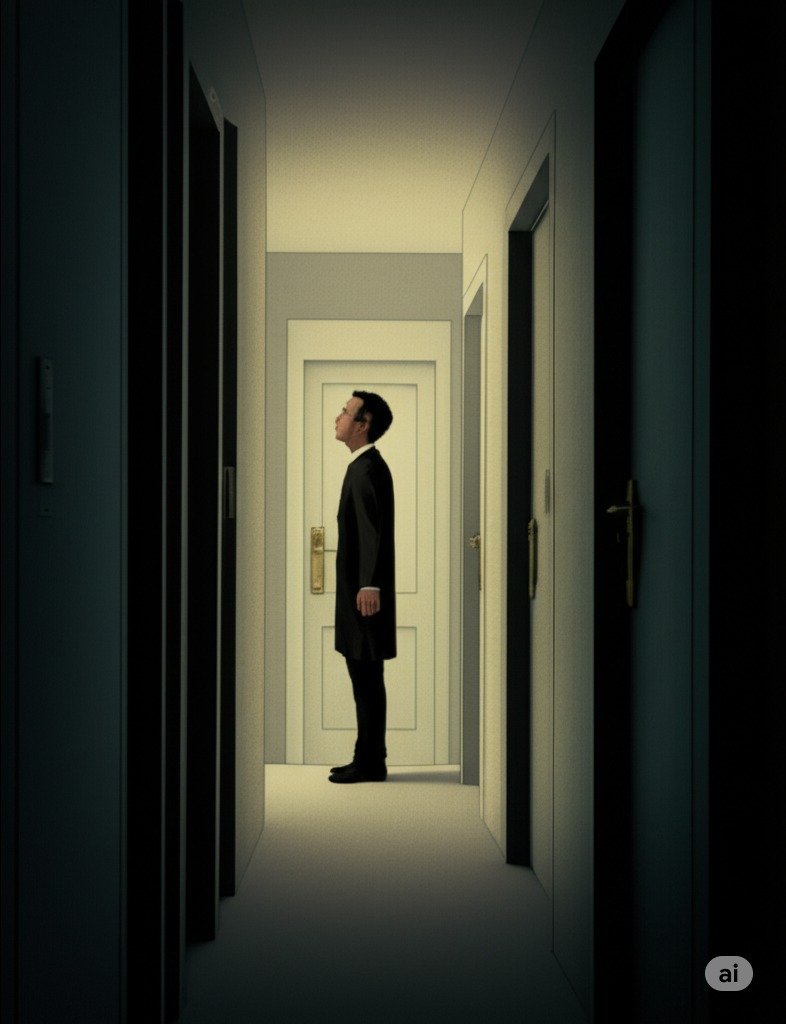
- The image of Joseph K. in a dimly lit, confusing hallway with many closed doors symbolizes the inaccessible and opaque nature of the legal system. It represents his feeling lost, uncertain, and unable to find clear pathways or understanding within the system.
- "The Trial" prompts the reader to consider concepts related to justice, fairness, and the individual's experience when confronted by powerful, incomprehensible systems. It raises questions about transparency, due process, and accountability.
Essay Questions
- Discuss how "The Trial" uses the experience of Joseph K. to critique or comment on bureaucratic systems and the nature of justice.
- Analyze the psychological impact of the inexplicable trial on Joseph K. How does his mental state evolve throughout the narrative, and what does this convey about the human response to an absurd situation?
- Explore the concept of "mystery" and "confusion" as central elements in "The Trial." How do these elements contribute to the story's themes and its allegorical significance?
- Compare and contrast Joseph K.'s initial reaction to his arrest with his feelings and actions as the trial progresses. What does this progression reveal about his character and the pervasive nature of the trial?
- The excerpt describes the story as "like a bad dream." Discuss how the narrative elements and Joseph K.'s experiences contribute to this dreamlike quality, and what effect this has on the reader's understanding of the themes.
Glossary of Key Terms
- Absurdity: The quality or state of being ridiculous or wildly unreasonable. In "The Trial," it refers to the nonsensical and illogical nature of Joseph K.'s arrest and the legal proceedings.
- Allegory: A story, poem, or picture that can be interpreted to reveal a hidden meaning, typically a moral or political one. "The Trial" can be seen as an allegory for various societal or existential issues.
- Bureaucracy: A system of government in which most of the important decisions are made by state officials rather than by elected representatives. In "The Trial," it represents the complex, impersonal, and often unfeeling legal apparatus.
- Kafkaesque: A term used to describe concepts and situations reminiscent of Franz Kafka's fictional work, particularly "The Metamorphosis" and "The Trial." These situations are typically characterized by surreal, confusing, and threatening complexities.
- Protagonist: The leading character or one of the major characters in a drama, movie, novel, or other fictional text. Joseph K. is the protagonist of "The Trial."
- Surreal: Marked by the intense, irrational reality of a dream; a style of art and literature developed principally in the 20th century, stressing the subconscious or nonrational significance of imagery arrived at by automatism or by the exploitation of chance effects, unexpected juxtapositions, etc. The "bad dream" quality of "The Trial" is a surreal element.
- The Trial: The specific legal process that Joseph K. is subjected to, which is the central conflict and mystery of the novel.
- Undetermined guilt: The state of being accused of a crime without specific charges or knowledge of wrongdoing, which is central to Joseph K.'s predicament.
( N.B. 위 콘텐츠는 Google AI Studio 로 제작한 것입니다 )
'동화' 카테고리의 다른 글
| Madame Bovary / Gustave Flaubert (0) | 2025.05.13 |
|---|---|
| Don Quixote / Miguel de Cervantes (0) | 2025.05.13 |
| In Search of Lost Time / Marcel Proust (0) | 2025.05.13 |
| Ulysses / James Joyce (0) | 2025.05.13 |
| The Brothers Karamazov / Fyodor Dostoevsky (0) | 2025.05.13 |


