
데일리스터디
Prometheus and the Gift of Fire 본문
In Greek mythology, Prometheus was a Titan who felt sorry for humans who lived without fire, in cold and darkness. The gods kept fire only for themselves. So, Prometheus bravely stole fire from the gods by hiding it in a hollow fennel stalk and brought it to humankind. With fire, humans could stay warm, cook food, and make tools, making their lives much better. However, Zeus, the king of the gods, was very angry with Prometheus for disobeying him and giving fire to humans. As punishment, Zeus chained Prometheus to a rock, where an eagle would come every day to eat his liver, which would then grow back overnight, causing him endless suffering. The most important scene to show in an image would be Prometheus handing the gift of fire to a human.
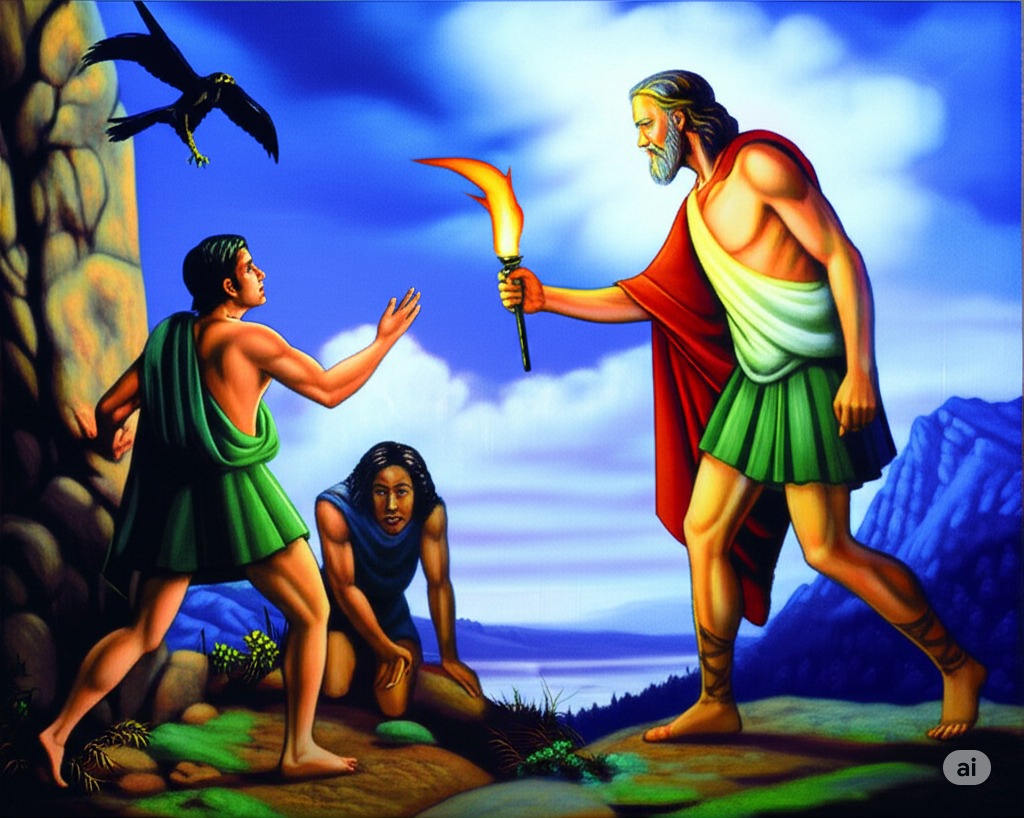
( N.B. 위 콘텐츠는 Google AI Studio 로 제작한 것입니다 )
스터디 가이드
Study Guide: Prometheus and the Gift of Fire
Quiz:
- Who was Prometheus in Greek mythology?
- Why did Prometheus feel sorry for humans?
- Who kept fire only for themselves according to the story?
- How did Prometheus steal fire from the gods?
- What did fire enable humans to do?
- How did humans' lives improve with fire?
- Who was angry with Prometheus for giving fire to humans?
- Why was Zeus angry with Prometheus?
- What was Zeus's punishment for Prometheus?
- What was the most important scene to show in an image illustrating the story?
Answer Key:
- Prometheus was a Titan in Greek mythology.
- He felt sorry for humans because they lived without fire, in cold and darkness.
- The gods kept fire only for themselves.
- He hid it in a hollow fennel stalk.
- Fire enabled humans to stay warm, cook food, and make tools.
- Their lives became much better with the gift of fire.
- Zeus, the king of the gods, was angry with him.
- Zeus was angry because Prometheus disobeyed him by giving fire to humans.
- Zeus chained Prometheus to a rock where an eagle ate his liver daily, causing endless suffering.
- The most important scene would be Prometheus handing the gift of fire to a human.
Essay Questions:
- Discuss the motivations behind Prometheus's actions and the consequences he faced. How does this story explore themes of compassion, defiance, and punishment?
- Analyze the significance of fire in the story. How does its transfer from the gods to humans represent a shift in power or the advancement of humanity?
- Compare and contrast the perspectives of Prometheus and Zeus regarding humanity and the role of the gods. What does this conflict reveal about their characters and values?
- Explore the symbolic meaning of the eagle and the regenerating liver in Prometheus's punishment. What does this endless suffering represent in the context of the myth?
- Consider the moral implications of Prometheus's act. Was his action justifiable, despite defying the gods? Discuss the ethical considerations presented in the story.
Glossary of Key Terms:
- Titan: In Greek mythology, a race of powerful deities who preceded the Olympian gods.
- Prometheus: A Titan known for his intelligence and as a champion of humankind.
- Fire: In the context of the story, a symbol of warmth, light, technology, and civilization.
- Gods: The ruling deities of Mount Olympus, who kept fire for themselves.
- Hollow fennel stalk: The object Prometheus used to conceal the stolen fire.
- Zeus: The king of the gods, who punished Prometheus.
- Punishment: The suffering inflicted upon Prometheus for his disobedience.
- Chained to a rock: The method used to restrain Prometheus.
- Eagle: The creature sent daily to torment Prometheus by eating his liver.
- Liver: The organ that regenerated overnight, ensuring Prometheus's continuous suffering.
- Disobeying: Acting against the commands or wishes of someone in authority.
- Suffering: The state of experiencing pain, distress, or hardship.
( N.B. 위 스터디 가이드는 구글 NotebookLM 으로 제작한 것입니다 )
'동화' 카테고리의 다른 글
| Theseus and the Minotaur (0) | 2025.05.12 |
|---|---|
| Pandora's Box (0) | 2025.05.12 |
| The Winter's Tale 겨울 이야기 / Shakespeare 셰익스피어 (1) | 2025.05.07 |
| The Tempest 템페스트 / Shakespeare 셰익스피어 (0) | 2025.05.07 |
| Henry V 헨리 5세 / Shakespeare 셰익스피어 (0) | 2025.05.07 |


